
VOL. 11 · Track 7 · 7 / 15
An Opera Aria Sung by the Piano
Newly arrived in Paris, young Chopin took a genre an Irishman had named, the nocturne, and filled it with a singing piano.
Until membership opens, all fifteen stories stay free.
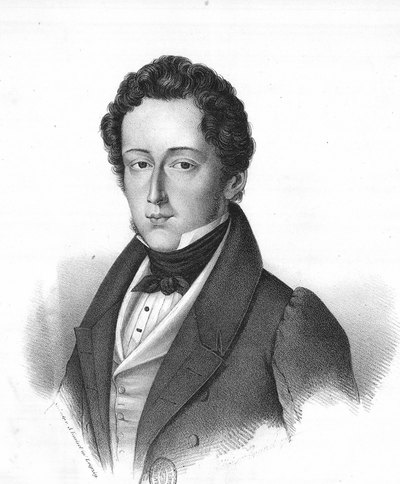 The composer of this pieceFrédéric Chopin1810–1849 · born in Żelazowa Wola, Poland
Night. A candlelit drawing room in Paris, and people gather quietly around the piano. The pianist is a pale, slender young man from Poland: Frédéric Chopin.
Welcome to the seventh stop. Chopin reached Paris in autumn 1831, aged twenty-one. Around then, an uprising against Russian rule in his homeland was crushed, and Chopin never set foot in Poland again. In Paris he preferred small salons to big concert halls, and made his living teaching piano to aristocrats and the children of wealthy families.
The name "nocturne," a night piece for piano, was not Chopin's invention. The Irish pianist John Field used it first: a left hand gently rolling wide chords, with a right hand singing above. Chopin inherited the idea and made it far deeper and more brilliant.
Today's nocturne is the second of a set of three published in 1832. Listen to the right-hand melody. Doesn't it sound like an opera singer drawing breath and singing an aria? Chopin loved Italian opera, Bellini above all. Just as a singer adds ornaments the second time through a tune, this melody gathers more decoration each time it returns.
The piano is an instrument whose sound begins to fade the instant a key is struck. Making it sing a long, unbroken line was Chopin's art.
Listen for this
- The first melodythe left hand sets a slow, rocking-chair beat, and the right hand begins to sing softly.
- When the melody returnsthe same tune comes back thick with tiny ornaments. Compare it with the first time.
- The endingthe right hand pours out a cascade of quick, glittering notes, then settles quietly as the night deepens.
A question to think about
Chopin never returned to the homeland he left at twenty-one, and poured his longing into music in Paris. Today, too, huge numbers of people leave home because of war or politics and build lives in other countries.
For people who have lost their homeland to keep their culture and language in a new place, what should the society that receives them do alongside them?