
VOL. 11 · Track 14 · 14 / 15
A Deadline Learned From the Newspaper
Gershwin read in the paper that he was writing a new piece. Weeks later, one clarinet line woke up a New York concert hall.
Until membership opens, all fifteen stories stay free.
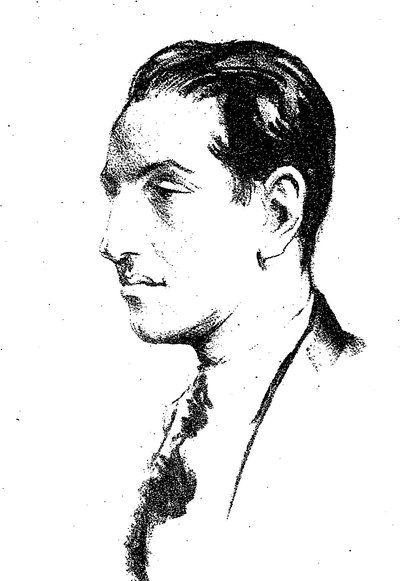 The composer of this pieceGeorge Gershwin1898–1937 · born in Brooklyn, New York, USA
New York, January 1924. George Gershwin, twenty-five, opens the newspaper and, as the story goes, finds an announcement: Gershwin is at work on a jazz concerto for a concert by Paul Whiteman's band. He was writing no such thing. The concert was only weeks away.
This is the fourteenth stop. Gershwin was a young composer who had made his name with Broadway songs. Whiteman, the bandleader, wanted to show that jazz could hold its own in a concert hall, and was planning a program called "An Experiment in Modern Music."
Gershwin wrote fast. He later said that on a train to Boston, listening to the rattle of the wheels, the shape of the whole piece came to him. As he wrote it out for piano, Ferde Grofé, Whiteman's arranger, scored it for the band's instruments. The title is said to have been his brother Ira's suggestion.
12 February 1924, Aeolian Hall, New York. Gershwin himself took the piano. Parts of the solo were not fully written down, and he reportedly filled them in on the spot.
And then the first sound. The clarinet trills low, then slides all the way up from bottom to top. The story goes that in rehearsal the clarinetist playfully smeared the notes together, Gershwin loved it, and he kept it.
Listen for this
- The openingthe clarinet's glissando, a low trill sweeping upward. With this one line the whole piece wakes up.
- The piano solosthe piano steps out alone and twists and tumbles through rhythms playfully. This is where the flavor of jazz piano is strongest.
- The big slow tunelater in the piece the strings sing a broad, warm melody that opens out like the night sky over New York.
A question to think about
This piece borrowed the language of jazz, created and nurtured by Black musicians, and was among the first to bring it before a concert-hall audience with a white band. Jazz gained new listeners, yet many Black jazz musicians of the time could hardly get onto such stages at all.
When a culture moves onto a bigger stage, what is needed so that the people who created it can stand on that stage too?
The piece at this track
Gershwin · about 16 min
Recording on its way