
VOL. 11 · Track 10 · 10 / 15
The Instrument Bought in Secret
Tchaikovsky wanted to use the celesta he had seen in Paris before any other composer could. Its sound became the Sugar Plum Fairy.
Until membership opens, all fifteen stories stay free.
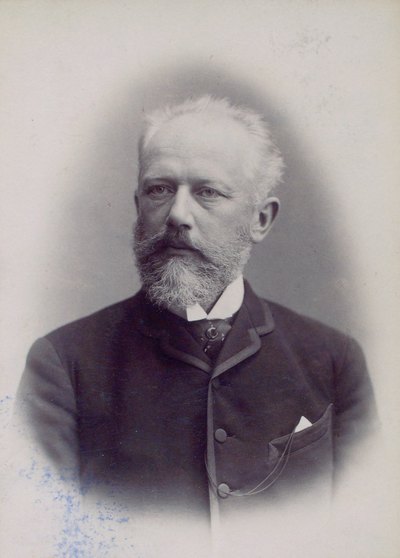 The composer of this piecePyotr Ilyich Tchaikovsky1840–1893 · born in Votkinsk, Russia
Paris, spring 1891. Stopping over on his way to a concert tour of America, Tchaikovsky set eyes on a new instrument. It looked like a small upright piano, but when you pressed a key, little hammers struck metal bars inside and rang out clear as bells. It was the celesta, made a few years earlier by the Paris instrument builder Auguste Mustel.
This is the tenth stop. Tchaikovsky was then writing the ballet The Nutcracker. He wrote to his Moscow publisher Jurgenson asking him to bring the instrument to Russia, and urged him to show it to no one, because other composers, Rimsky-Korsakov and Glazunov in particular, might hear of it and use it first.
That sound became the voice of the Sugar Plum Fairy in Act II of The Nutcracker. The ballet was first staged in December 1892, at the Mariinsky Theatre in St Petersburg.
A quick word on the story. On Christmas Eve a girl named Clara receives a nutcracker doll, and in her dream she travels with it to a land of sweets. Its ruler is the Sugar Plum Fairy. Tchaikovsky chose the celesta as the perfect voice for a fairy who glitters like sugar.
The fun part is that beneath the sparkle, something very low sounds too. The bass clarinet now and then slides down into the depths in reply. Bright and dark side by side make the fairy's dance more mysterious.
Listen for this
- The openingthe strings pluck their strings with their fingers, stepping lightly, like a fairy on tiptoe.
- The celesta's entrya bell-like, crystal sound sings the dance tune. This is the new instrument Tchaikovsky kept secret.
- The bass clarinetbetween phrases, listen for a low woodwind sliding all the way down.
A question to think about
Tchaikovsky asked for a new instrument to be kept secret so he could use it before other composers. Companies today likewise guard new technologies with patents or secrecy and race to get them out first.
Between wanting to be first to use a discovery and opening it up for everyone, which does more to make the world better?
The piece at this track
Tchaikovsky · about 2 min
Recording on its way