
VOL. 01 · Track 11 · 11 / 15
Symphony No. 5 · Movement I
A movement that begins with the 'fate' theme sung darkly by low clarinets. The theme reappears in all four movements and runs through the whole symphony.
 VOL. 01
 Your First Music Journey처음 떠나는 음악 여행
This track plays with a membership. Tracks 1 and 2 are open to everyone.About membership
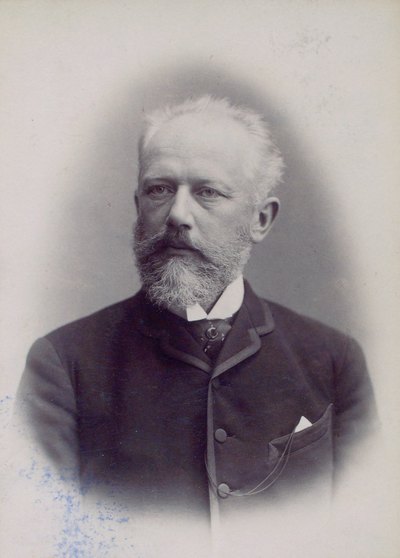 The composer of this piecePyotr Ilyich Tchaikovsky1840–1893 · born in Votkinsk, Russia
About this piece
Two clarinets begin a dark, slow march in their low register. Around this time Tchaikovsky wrote in his sketches the words 'complete resignation before fate'. This theme returns again and again until the symphony ends.
At a glance
- What it isthe first movement of Symphony No. 5 in E minor. It begins with a slow Andante introduction and continues Allegro con anima.
- Who, when, whywritten in the summer of 1888 by the forty-eight-year-old Tchaikovsky at his country house in Frolovskoye near Moscow. He conducted the first performance himself in St Petersburg that November.
- What to listen forhow the clarinets' theme from the introduction reappears in this and later movements.
Listen for
- The introductiontwo clarinets sing the theme low and dark, with heavy support from the strings.
- The marchwhen the fast section begins, clarinet and bassoon bring out a new, swaying theme that moves between dance and march and grows larger.
- The songthe strings sing a warm, broad melody, but in the end the movement sinks low and dark and fades away.
When it was written
It was his first symphony in eleven years, since the Fourth. At the time Tchaikovsky feared he could no longer write good music, and while composing he wrote in a letter that he wanted to prove to himself he had not been emptied out.
Even after the first performances he considered it a failure. But a warm reception at a performance in Hamburg the following year, it is said, changed his mind. The dark theme of the introduction returns in the last movement transformed into a bright march in the major.
A question to think about
Tchaikovsky was already a famous composer, yet he feared he had been emptied out, and he considered a piece that many would come to love a failure.
Even outstanding people doubt their abilities. Is such doubt a force that helps us improve, or a burden? What is a healthy way to handle self-doubt?