
VOL. 01 · Track 12 · 12 / 15
Symphony No. 9 'From the New World' · II. Largo
A slow, warm melody sung by the English horn, at the heart of a symphony written by a Czech composer living in America.
 VOL. 01
 Your First Music Journey처음 떠나는 음악 여행
This track plays with a membership. Tracks 1 and 2 are open to everyone.About membership
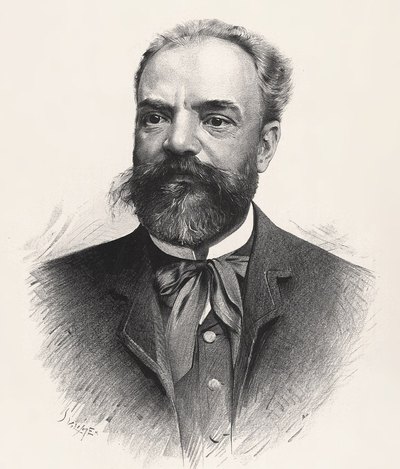 The composer of this pieceAntonín Dvořák1841–1904 · born in Nelahozeves, Czech Republic
About this piece
It sounds like someone singing far away, perhaps across a field at sunset, or across the sea from home.
At a glance
- What it isthe slow second movement of a four-movement symphony, marked Largo, very broad.
- Who, when, whyDvořák completed it in 1893 while director of the National Conservatory in New York; it premiered at Carnegie Hall that December.
- What to listen forthe English horn's melody, the lonely middle section, and the very quiet final chords.
Listen for
- The openinga few slow chords from the winds open the door.
- The English hornover a soft bed of muted strings, the movement's signature melody flows.
- The middle and endflute and oboe sing a trembling, lonely tune; the music glows brightly once; then the first melody returns and the movement closes softly with the double basses.
When it was written
In autumn 1892 Dvořák, fifty-one, left Bohemia for New York to head the new National Conservatory of Music. He thought deeply about what American music should grow from, and was greatly moved by spirituals he heard through his student Harry Burleigh.
He wrote the symphony in New York at that time, and the following summer he holidayed in Spillville, a small Iowa town with many Czech immigrants. Dvořák explained that he did not copy American melodies but wrote his own tunes in their spirit. The English horn melody was later given words by a pupil and became the song "Goin' Home."
A question to think about
Dvořák came to a strange country and set out to learn from its people's music, while never forgetting the sound of his Czech home. Today many people live abroad for migration, study or work.
Can learning a new country's culture and keeping one's home culture go together? What must a receiving society do to make that possible?