
VOL. 06 · Track 15 · 15 / 15
Reflection Rag
A ragtime piece for piano in B-flat major, published in 1917, the year Scott Joplin died.
 VOL. 06
 The Other Joplin조플린의 또 다른 얼굴
This track plays with a membership. Tracks 1 and 2 are open to everyone.About membership
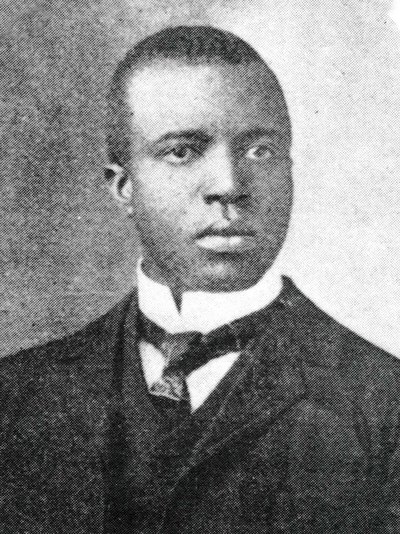 The composer of this pieceScott Joplinc. 1868–1917
About this piece
In 1917, the same year Scott Joplin died in New York, a piano piece called Reflection Rag appeared in print. A reflection can be an image on the surface of water, or a quiet look back at the past. It came out just as the ragtime craze was fading. What might it have been reflecting?
At a glance
- What it isa ragtime piece for piano in B-flat major, lasting about four minutes.
- Who and whenby Scott Joplin, published in 1917, the year of his death.
- What to listen forthe steady step of the left hand, the right hand slipping just off the beat, and the moments when a new section begins.
Listen for
- The left hand's stepin a classic rag the left hand usually alternates a low note and a chord, walking evenly in two. That steady walk holds up the whole piece from below.
- Right-hand syncopationsyncopation shifts a strong beat a little early or a little late, which gives the rhythm its spring. Follow the right hand as it drifts away from the left and then lands with it again.
- Where sections changerags are usually built from several short sections joined one after another. Listen for how the height of the melody and the mood shift when a new section comes in.
- An unhurried tempoJoplin urged players not to play ragtime fast. Listen for whether the off-beats come through more clearly at a relaxed pace.
When it was written
Ragtime is piano music that grew up among African American musicians in the late nineteenth century. Joplin made his name in 1899 with the Maple Leaf Rag and published The Entertainer in 1902. In 1908 he also brought out School of Ragtime, a set of exercises on how to play rags.
Around 1907 Joplin moved to New York and put much of his energy into his opera Treemonisha. He published the score at his own expense in 1911, but never saw a proper performance of it in his lifetime. Meanwhile, listeners were turning toward a newer sound, jazz. Reflection Rag came out at the very end of that period.
A name heard again
For a long time after his death, Joplin's music was seldom heard by the wider public. Then the 1973 film The Sting used his pieces, and his music reached a large new audience. Treemonisha reached the stage in the 1970s, and in 1976 Joplin was awarded a special Pulitzer Prize.
A question to think about
Reflection Rag was published in the year Joplin died, just as audiences were moving from ragtime to jazz. Decades later his name came back through a film, through the stage, and through a special Pulitzer Prize.
How should we think about work that goes unrecognized while its maker is alive and is only loved long afterward? Whose voices around us today might we be quietly passing by?