
VOL. 06 · Track 14 · 14 / 15
Pine Apple Rag
A piano rag Joplin published in 1908, the year of his ragtime exercise book, in which the right hand slips just off the beat over a steadily walking left hand.
 VOL. 06
 The Other Joplin조플린의 또 다른 얼굴
This track plays with a membership. Tracks 1 and 2 are open to everyone.About membership
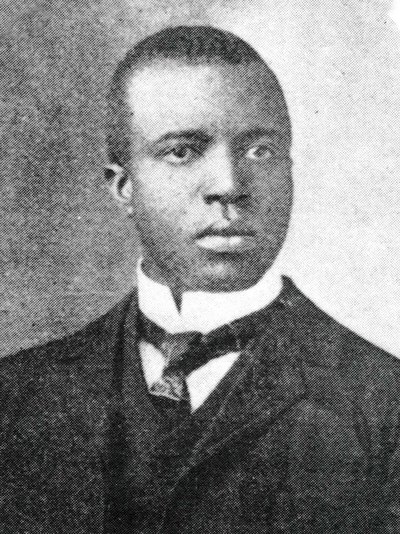 The composer of this pieceScott Joplinc. 1868–1917
About this piece
What does a piece named after a fruit sound like? The English title even splits the word in two: Pine Apple. In 1908, the year this rag appeared, Scott Joplin also published School of Ragtime, a short book of exercises on how to play the music properly. Why would a composer bother to write an exercise book as well? Keep that question in mind, and this piece may sound a little different.
At a glance
- What it isa ragtime piece for piano in B-flat major, lasting about three minutes.
- Who and whenwritten by Scott Joplin and published in 1908.
- What to listen forthe steady step of the left hand, the right hand slipping around that beat, and the moments when a new section comes in.
Listen for
- The left hand's walkin a classic rag the left hand usually alternates a low note and a chord, an oom-pah stride in two. The off-beats on top only come alive if this walk stays steady.
- Right-hand syncopationsyncopation means deliberately pushing a strong beat early or holding it back. Listen for the places where the right-hand melody jumps in just ahead of the beat.
- When the section changes: rags are usually built from several short sections that follow one another and repeat. Notice how the height of the melody or the mood shifts when a new one begins.
When it was written
Ragtime is piano music that grew up among African American musicians in the late nineteenth century. It laid syncopated rhythm over a march-like frame and became a craze, selling widely as sheet music. With no radio, people bought the music and tried new rags at the piano at home.
Joplin grew up in Texas and as a young man travelled the Midwest as a pianist. In the 1890s he lived in Sedalia, Missouri, and in 1899 he made his name with the Maple Leaf Rag. He later worked in St. Louis and moved to New York around 1907, so this piece was published during his New York years.
School of Ragtime, published the same year, contains exercises for getting ragtime rhythm exactly right. Joplin is also known for urging players not to play ragtime fast. In 1911 he published his opera Treemonisha at his own expense, but he never saw a proper production of it in his lifetime.
Joplin died in New York in 1917, as popular taste was moving on to jazz. His music found a wide audience again through the 1973 film The Sting, and in 1976 he was awarded a special Pulitzer Prize.
A question to think about
In 1908 Joplin published Pine Apple Rag and, alongside it, a book explaining how rags like it should be played. Played fast, a rag can sound more exciting, yet he asked players not to hurry.
When what a creator intended and what listeners enjoy pull in different directions, whose way should we follow? When you sing a favourite song differently from the original, are you caring for that song, or turning it into something else?