
VOL. 06 · Track 12 · 12 / 15
Antoinette
A Joplin piano piece from 1906 that moves at an unhurried pace. You can hear the roots of ragtime in the march.
 VOL. 06
 The Other Joplin조플린의 또 다른 얼굴
This track plays with a membership. Tracks 1 and 2 are open to everyone.About membership
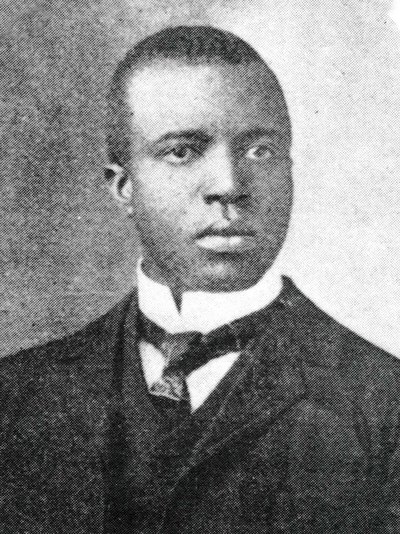 The composer of this pieceScott Joplinc. 1868–1917
About this piece
Not every rag stamps and races. Antoinette walks at a calmer pace. The left hand marks the beat note by note, and above it the right hand now and then steps around the beat. This is a piano piece Scott Joplin published in 1906.
At a glance
- What it isa piano piece by the ragtime composer Joplin.
- Who, whenpublished by Scott Joplin in 1906.
- What to listen forthe even, march-like step of the left hand, and the rhythm the right hand lays on top of it.
Listen for
- The steplisten to the left hand marking 'one-two, one-two' evenly. Ragtime grew out of the march, so this kind of step lies underneath it.
- A right hand that sidesteps: syncopation, where the right hand gently avoids the head of the beat, is mixed in here and there. At an unhurried speed, that mismatch can sound all the clearer.
- Sections in turnrags and marches of Joplin's time usually present several short sections one after another, with repeats. Try to find where the melody changes.
When it was written
Ragtime arose among African American musicians in the late nineteenth century. At the time, band marches were hugely popular in America, and people danced steps such as the 'two-step' to them. Ragtime laid the rhythmic sense of Black music over the structure of the march. Joplin's The Entertainer even carries the subtitle 'A Rag Time Two Step'.
Joplin was born in Texas and travelled from town to town playing piano. He made his name with Maple Leaf Rag in 1899 and published The Entertainer in 1902. Around 1907, the year after this piece came out, he moved to New York.
He disliked ragtime played fast, and in his 1908 School of Ragtime he asked players not to play it fast. Listening to a relaxed piece like Antoinette, you can begin to guess what he meant.
A question to think about
Ragtime borrowed a form that already existed, the march, and by laying a new rhythm over it became an entirely different music. It was like serving a new dish in an old bowl.
Can you find examples today of something new made by borrowing an existing form? If you made a small change to something familiar to make it new, what would you change?