
VOL. 05 · Track 5 · 5 / 15
The Entertainer
A rag in which the right hand bounces across the beat over an evenly walking left hand. Joplin wrote 'not fast' in the score.
 VOL. 05
 Ragtime: Joplin and Scott래그타임 — 조플린과 스콧
This track plays with a membership. Tracks 1 and 2 are open to everyone.About membership
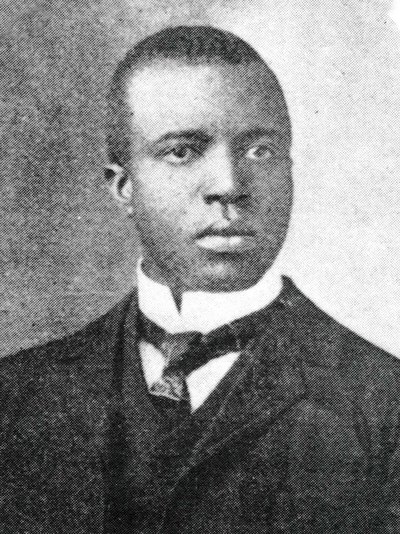
The composer of this pieceScott Joplinc. 1868–1917About this piece
The right hand springs out slightly ahead of the beat while the left hand walks evenly below, 'oom-pah, oom-pah'. This crossing creates a lilt that sets the body moving. It is Scott Joplin's The Entertainer.
At a glance
- What it isa rag for piano, subtitled 'A Rag Time Two Step' in the score.
- Who, when, whypublished in 1902 in St. Louis by Joplin, then in his thirties.
- What to listen forthe left hand's even beat, and the syncopation of the right hand striking between the beats.
Listen for
- First callthe right hand opens the door with a short melody.
- Crossingwhen the theme begins, the right hand bounces up striking between the beats while the left hand keeps the beat without wavering.
- Several sectionsthe piece is built from several short sections that follow one another and repeat. Each time the section changes, the melody and key change.
When it was written
Ragtime is piano music that arose among African American musicians in the late nineteenth century. The left hand keeps an even 'oom-pah' beat, while the right hand deliberately plays across the beat in syncopation to create its lilt. Joplin was called the King of Ragtime, and his sheet music was played on pianos in homes and saloons across America.
Joplin disliked hurried, fast performances of ragtime, and he wrote 'Not fast' in the score of The Entertainer. Joplin died in New York in 1917, by which time ragtime's popularity had given way to jazz. His music was forgotten for a while, then loved widely again when his pieces were used in the 1970s film The Sting. In 1976, long after his death, he received a special Pulitzer Prize.
A question to think about
Joplin hoped ragtime would be recognized not as light saloon music but as serious music, but he did not see that dream come true in his lifetime. Being a Black musician made the path even harder.
What decides whether some music is recognized as 'serious art' and other music is not? Is there art today that is undervalued because of its origins or genre?