
VOL. 07 · Track 10 · 10 / 15
Étude in C minor
An étude in which the right hand sweeps up and down the keyboard in great waves. Around twenty, Chopin turned the stretching of the hand into music.
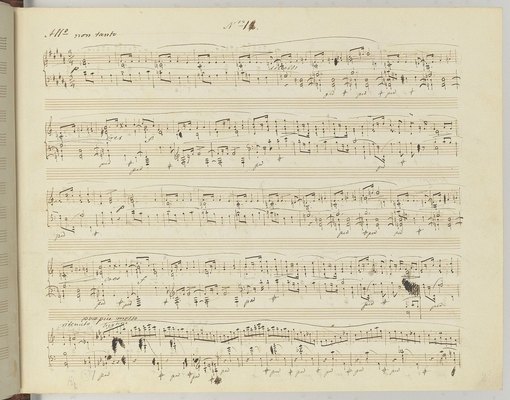 VOL. 07
 Just One Piano피아노 한 대로
This track plays with a membership. Tracks 1 and 2 are open to everyone.About membership
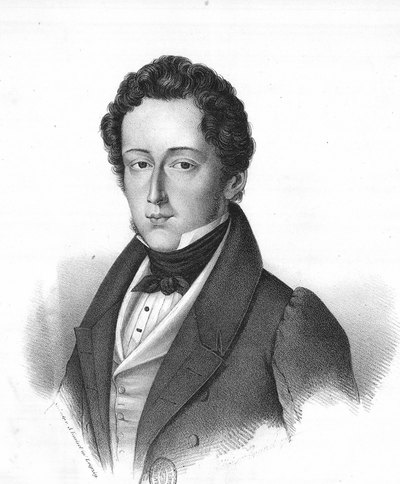 The composer of this pieceFrédéric Chopin1810–1849 · born in Żelazowa Wola, Poland
About this piece
The right hand sweeps from the bottom of the keyboard to the top and back like a great wave, while the left hand walks below in weighty octaves. Chopin's first étude begins by asking the hand to open wide.
At a glance
- What it isthe first piece of the twelve Études, Op. 10, in C major.
- Who, when, whyChopin began writing them in Warsaw around 1829 to 1830, when he was about twenty, and published them in Paris in 1833 with a dedication to Liszt.
- What to listen forthe right hand's wide broken chords, and the flow of harmony they trace.
Listen for
- Wavesthe right hand spreads each chord one note at a time and races over a wide range. The hand must stretch its fingers as far apart as they will go.
- Pillarsthe left hand holds long low octaves that set up the pillars of the harmony. Listen for how the left hand's note changes whenever the shape of the wave changes.
- The endhaving passed through several keys, the wave returns to C major and spreads out broadly to close.
When it was written
Études were originally pieces for learning finger technique. Chopin added musical beauty to them, creating études that could also be played in concert. Each piece concentrates on one skill.
Chopin left Warsaw in 1830 and from the following year settled in Paris. The Op. 10 Études were published in Paris in 1833, and he dedicated them to Liszt, the Hungarian pianist with whom he had recently become friends. Liszt, it is said, played them so well that he delighted Chopin.
A question to think about
Chopin added musical beauty to finger practice that could easily be dull, so that the practice itself became a work. Repeated practice is essential to much learning, but it can also be hard to bear.
How can dull repetitive practice become enjoyable and meaningful? How can we tell repetition that learning truly needs from repetition we could cut back?