
VOL. 09 · Track 7 · 7 / 15
Felicity Rag
Felicity means happiness. An easygoing, warm rag published in 1911, while Joplin was in New York holding on to his dream of an opera.
 VOL. 09
 When You Need to Focus집중이 필요할 때
This track plays with a membership. Tracks 1 and 2 are open to everyone.About membership
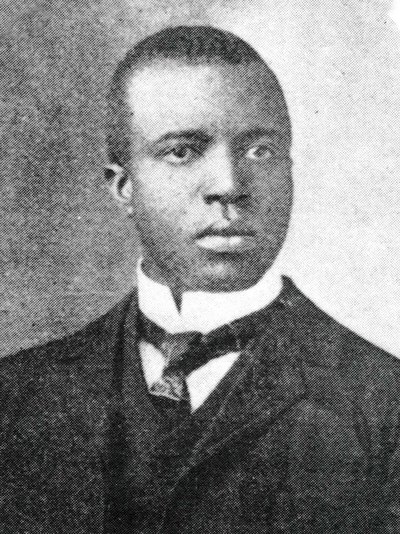 The composer of this pieceScott Joplinc. 1868–1917
About this piece
The left hand steps along evenly: oom, pah, oom, pah. Above it, the right-hand melody keeps stepping out a little ahead of the beat and then following a little behind. It never hurries, yet your shoulders start to move on their own. The title, Felicity, means happiness.
At a glance
- What it isa ragtime piece for solo piano.
- Who, when, whypublished in 1911, when Scott Joplin was living in New York.
- What to listen forthe even oom-pah walk of the left hand, and the syncopation of the right hand bouncing across it.
Listen for
- The left hand's walklow notes and higher chords alternate, keeping an even beat like a march. This is the floor that ragtime stands on.
- The right hand's syncopation: a rhythm that deliberately lands just off the beat. In the small gap where the two hands slip apart, ragtime's lilt is born.
- Several sectionsa classic rag usually strings together a few sections of about sixteen bars each, and each section is repeated once. Try to catch the moment a new tune begins.
- TempoJoplin often wrote on his sheet music a reminder not to play ragtime fast. Listen for how clearly the syncopation comes through at an easy pace.
When it was written
Ragtime is piano music that arose among African American musicians in the late nineteenth century. It sold widely as sheet music and rang out from the pianos found in many homes. Joplin made his name in 1899 with the Maple Leaf Rag, and he sought to shape the piano rag into music to be listened to seriously, beyond dance music.
Around 1907 Joplin moved to New York. The year this piece appeared, 1911, was also the year he published the score of his opera Treemonisha himself. He worked hard to get the opera staged, but he never saw it properly performed, and he died in 1917.
After that, ragtime's popularity gave way to jazz. Joplin's music was forgotten for a while, then loved widely again when his pieces were used in the 1970s film The Sting.
A question to think about
This rag named happiness was published at a time when Joplin's big dream, the opera, was not working out. The piece never rushes, riding happily off the beat on top of an even walk.
What does it mean to hold on to small joys even on days when things do not go as you hoped? What scene from your day would you give the title happiness?