
VOL. 09 · Track 2 · 2 / 15
Organ Sonata in C minor · Movement III
A fugue-like final movement in which the theme enters voice by voice and builds. Hands and feet pass the same theme along, carrying the tension of C minor.
 VOL. 09
 When You Need to Focus집중이 필요할 때
Track info
「Organ Sonata in C minor」Performed by Hans Otto, organistrecorded 1964Wikimedia CommonsCC BY 1.0
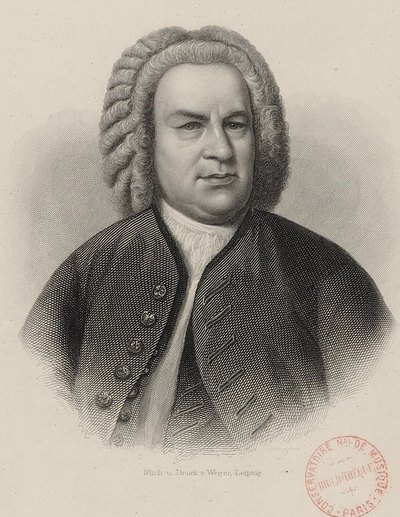 The composer of this pieceJohann Sebastian Bach1685–1750 · born in Eisenach, Germany
About this piece
The last movement of Sonata No. 2 is an Allegro, played quickly. Rather than running like a dance, though, it builds up in the manner of a fugue, with one theme taken up by several voices in turn.
At a glance
- What it isthe third and final movement of Organ Trio Sonata No. 2. The theme enters in turn, as in a fugue.
- Who, when, whyone of the six pieces Bach gathered in Leipzig around 1730.
- What to listen forthe moments when the same theme appears in the right hand, the left hand and the feet in turn.
Listen for
- First entryone hand brings out the theme alone. When the other hand enters with the same theme, the first lays a new line on top.
- The theme in the feetafter the hands have traded the theme, listen for whether the feet tread it on the pedals. In the low register the same theme sounds different.
- The closeafter passing through several keys, the theme returns to C minor and the movement ends firmly.
When it was written
The fugue was a technique Bach refined all his life: a single theme taken up by several voices in turn and woven together. He wrote a great many fugues for organ and keyboard, and in his last years he devoted himself to a collection called The Art of Fugue.
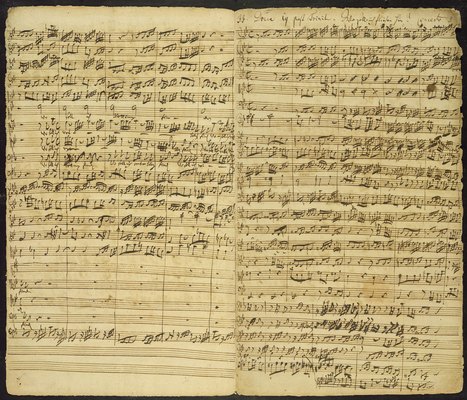
This set of trio sonatas survives in Bach's own fair copy. After his death the manuscript passed through his sons and pupils, and once it was printed in the nineteenth century it became important study and concert music for organists.
A question to think about
In a fugue the same theme is handed from voice to voice and grows richer along the way. It resembles an idea growing as it passes from the person who first spoke it to others.
When you take up someone's idea and develop it, how should the share of the person who first offered it be recognized? In something made together, is it possible to divide up 'whose' it is?