
VOL. 10 · Track 8 · 8 / 15
Concerto Grosso in G major · IV. Allegro
A quick movement in which the theme appears in voice after voice and builds up. The full band runs vigorously as one body.
 VOL. 10
 When You Need a Lift기운이 필요할 때
This track plays with a membership. Tracks 1 and 2 are open to everyone.About membership
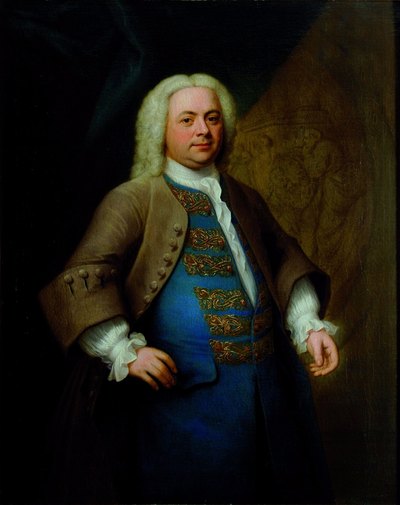 The composer of this pieceGeorge Frideric Handel1685–1759 · born in Halle, Germany
About this piece
After the slow third movement, the music gathers strength and starts to run again. The fourth movement of Op. 6 No. 1, an Allegro, is a piece in which the strings chase one another and build.
At a glance
- What it isa movement from Concerto Grosso Op. 6 No. 1. Marked Allegro, played fast.
- Who, when, whyHandel, then fifty-four, wrote all twelve in London in the autumn of 1739 and published them as a set the following year.
- What to listen forthe moments when one theme appears in several instruments in turn.
Listen for
- First entryone part brings out a clear theme, and the others enter with it one after another.
- Buildingas more parts join, the sound thickens and the crossing lines are woven like close fabric.
- The endall the parts finish together with force.
When it was written
In the autumn of 1739, in little more than a month, Handel wrote twelve concerti grossi in a burst. The following year he published them by subscription, and this set of twelve is today his Op. 6. In a concerto grosso a small group of solo instruments trades with a large string band; Handel took as his model the set of the same name by the Italian composer Corelli.
At the time Italian opera was losing favor in London, and Handel was turning to oratorios and odes with English words. These concertos were played between the acts of such performances to entertain the audience. Born in Germany, trained in Italy and active in England, Handel mixed in this set the musical styles of the many countries he had passed through.
A question to think about
Handel made the music of Germany, Italy and England his own as he moved between them, and in the end he became a British subject.
For someone who lives moving between countries, where is 'my country'? Of the place you were born, the place you learned and the place you live, which decides a person's identity?