
VOL. 10 · Track 7 · 7 / 15
Concerto Grosso in F major · Movement VI
A quick dance with a skipping rhythm that rounds off the concerto. The dance takes its name from the jig of Britain and Ireland.
 VOL. 10
 When You Need a Lift기운이 필요할 때
This track plays with a membership. Tracks 1 and 2 are open to everyone.About membership
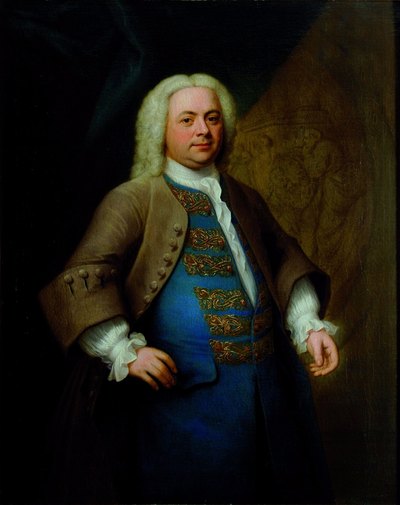 The composer of this pieceGeorge Frideric Handel1685–1759 · born in Halle, Germany
About this piece
What crowns the end of the concerto is a dance that skips lightly along. Op. 6 No. 9 closes its six movements with a gigue.
At a glance
- What it isa movement from Concerto Grosso Op. 6 No. 9. The last of six movements, a quick dance.
- Who, when, whyHandel, then fifty-four, wrote all twelve in London in the autumn of 1739 and published them as a set the following year.
- What to listen forthe rhythm leaping between long and short notes, and the parts entering one after another.
Listen for
- Leapinga rhythm pairing long and short notes sets off skipping.
- Following inone part brings out the theme and another follows, as if dancers were stepping onto the stage in turn.
- Two halveseach half is repeated, and at the end of the second the music returns to the home key to finish.
When it was written
In the autumn of 1739, in little more than a month, Handel wrote twelve concerti grossi in a burst. The following year he published them by subscription, and this set of twelve is today his Op. 6. In a concerto grosso a small group of solo instruments trades with a large string band; Handel took as his model the set of the same name by the Italian composer Corelli.
At the time Italian opera was losing favor in London, and Handel was turning to oratorios and odes with English words. These concertos were played between the acts of such performances to entertain the audience. The gigue took its name from the quick 'jig' of Britain and Ireland, and in the Baroque era it often served as the last movement of a suite.
A question to think about
Handel closed his concerto with a dance. Rather than heavy thoughts or a long song, he sent the audience off with a rhythm that sets the body moving.
When finishing something, what difference does it make to end lightly and joyfully rather than seriously and with a summing up? How would you like to end your day?