
VOL. 03 · Track 10 · 10 / 15
Piano Sonata No. 15 · Movement III
A short joke of just over two minutes. It opens as if tossing out a few notes, runs off lightly, passes through a trio in the middle, and returns to the start.
 VOL. 03
 A Classical Stroll고전파 산책
This track plays with a membership. Tracks 1 and 2 are open to everyone.About membership
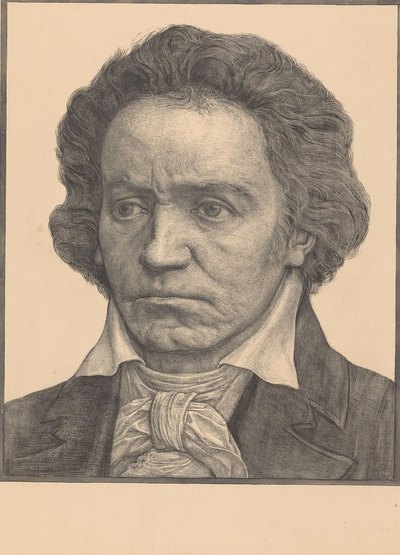 The composer of this pieceLudwig van Beethoven1770–1827 · born in Bonn, Germany
About this piece
The piano begins by tossing out a few notes, one by one, like someone who plays a trick and then quickly hides. Then it runs off lightly. Over in just over two minutes, in the blink of an eye, this movement is the Scherzo from Beethoven's Piano Sonata No. 15.
At a glance
- What it isthe third movement of the four-movement Piano Sonata No. 15 (Op. 28), marked 'Allegro vivace', meaning fast and lively.
- Who, when, whywritten by Beethoven in 1801 and published the following year.
- What to listen forthe short, tossed-off opening, the different mood of the trio in the middle, and the moment the music returns to the start.
Listen for
- The joke'scherzo' is Italian for 'joke'. Short notes are placed here and there, and the empty spaces between them are what make you smile.
- Trioin the middle section the mood changes, and the same short tune is repeated several times. Compare it with the opening and listen for what has changed.
- The returnwhen the trio ends, the opening scherzo comes back to close the movement. It is a three-part frame: scherzo, trio, scherzo again.
When it was written
In the sonatas and symphonies of Haydn and Mozart's time, the third movement was often an elegant court dance, the minuet. Beethoven often put a faster, more playful 'scherzo' in that place instead. This movement is one such scherzo standing in for a minuet.
The sonata carries the nickname 'Pastoral', but the name did not come from Beethoven. It was attached by someone else after publication and came into wide use. Symphony No. 6, the 'Pastoral', is a title Beethoven gave himself, so it is good not to confuse the two.
Around 1801 Beethoven was making a name for himself in Vienna as a pianist and composer. At the same time, it was a period when he had begun to worry that his hearing was getting worse.
A question to think about
Beethoven placed a 'joke' of just over two minutes in the middle of a serious sonata. Among the weightier movements, this short bit of play gives the listener a chance to breathe.
In a busy, serious day, when do you have a moment like a short joke? What strength might such small laughter give you in getting through a long day?