
VOL. 02 · Track 8 · 8 / 15
Suite in G minor · III. Allegro
A quick piece of little more than a minute in which the two hands constantly trade a theme. It comes from a keyboard collection Handel published himself, under his own name.
 VOL. 02
 A Baroque Morning바로크의 아침
This track plays with a membership. Tracks 1 and 2 are open to everyone.About membership
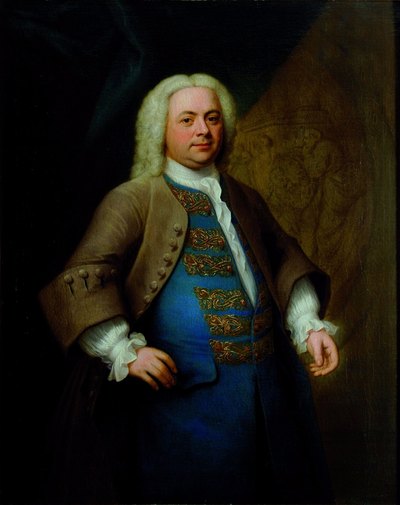 The composer of this pieceGeorge Frideric Handel1685–1759 · born in Halle, Germany
About this piece
In 1720 Handel published eight keyboard suites himself, and in the preface he explained why: incorrect copies were circulating without his knowledge, and he was offering a corrected edition. This piece belongs to the seventh suite of that collection.
At a glance
- What it isthe third piece of Suite No. 7 in G minor, from a collection of eight keyboard suites. It is a quick Allegro.
- Who, when, whyHandel published the collection in London in 1720, at thirty-five. It was written for harpsichord; the Pyeongeum recording is played on piano.
- What to listen forthe right and left hands taking turns with the same figure.
Listen for
- Setting offone hand brings out a quick figure and the other soon takes it up and carries on.
- Tradingthe two hands cross above and below, moving the same pattern through several keys. Follow one hand alone and you will hear when the other cuts in.
- The endthe short piece returns to G minor and ends firmly.
When it was written
Around 1720 Handel began directing Italian opera productions for the Royal Academy of Music in London. His keyboard music was popular among players, and copies made without his permission were being sold. Handel tried to put this right by issuing an edition he had chosen himself.
Suite No. 7 begins with a French overture, passes through several dances and ends with a passacaille that builds variations over a repeating bass. This Allegro is one short, quick piece among them.
A question to think about
Handel published the collection himself to correct the copies of his music being sold without permission. The creator was trying to protect the shape of his own work.
Today other people's writing, pictures and music spread easily online without permission. How should we balance protecting creators' rights with letting many people enjoy their work?