
VOL. 02 · Track 15 · 15 / 15
Organ Sonata in C minor · Movement I
A Vivace that opens with the firm energy of C minor. The two hands' lines and the pedal bass face off and blend like a concerto.
 VOL. 02
 A Baroque Morning바로크의 아침
This track plays with a membership. Tracks 1 and 2 are open to everyone.About membership
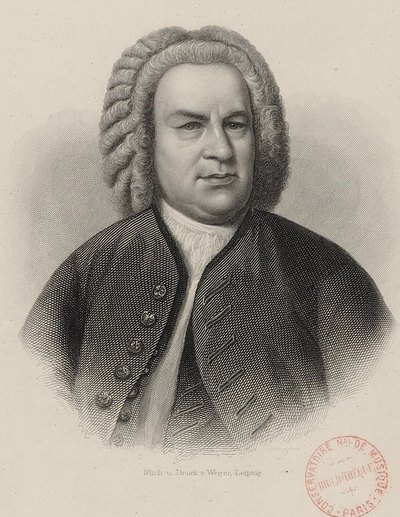 The composer of this pieceJohann Sebastian Bach1685–1750 · born in Eisenach, Germany
About this piece
Of the six organ trio sonatas, the second begins in C minor, a somewhat darker and sturdier color. Its tempo is Vivace, meaning to play with liveliness.
At a glance
- What it isthe first movement of Organ Trio Sonata No. 2. Right hand, left hand and feet each take one line.
- Who, when, whyBach bound the six into one collection in Leipzig around 1730. They are said to have been for the practice of his eldest son, Wilhelm Friedemann.
- What to listen forthe difference between passages where all three parts ring out together and passages where the two hands trade.
Listen for
- The openingover a pedal that walks with clear steps, the two hands present the C minor theme with force.
- Tradingone hand tosses out a short figure and the other catches it and passes it on. The same pattern moves between right and left keyboards.
- The returnthe opening theme reappears and sets up the frame of the piece, much like the passages in a concerto where everyone plays together.
When it was written
Bach studied the Italian concerto closely. As a young man in Weimar he arranged concertos by Italian composers such as Vivaldi for keyboard, learning how they were built. The concerto's way of bringing back the same theme as a frame runs through this movement too.
Trio sonatas are very hard to play. Each hand plays a different melody on a different keyboard, and the feet must tread an independent line as well. Even today this collection is important study material for anyone learning the organ.
A question to think about
In this piece three lines each go their own way yet blend into one music. No line drowns out another, and none simply copies the others. Each keeps its own shape while listening to the rest.
In a group of people with different opinions, what does it take to reach one decision while each person keeps their own voice?