
VOL. 02 · Track 11 · 11 / 15
Cello Suite No. 1 · Movement II
A calm German dance that follows the famous Prelude. A single cello flows on without pause, like gentle ripples.
 VOL. 02
 A Baroque Morning바로크의 아침
This track plays with a membership. Tracks 1 and 2 are open to everyone.About membership
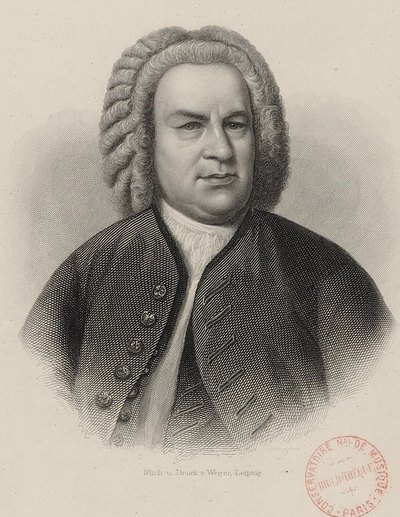 The composer of this pieceJohann Sebastian Bach1685–1750 · born in Eisenach, Germany
About this piece
Cello Suite No. 1 is famous for its rippling Prelude. When the Prelude ends, the cello catches its breath and begins the Allemande at a somewhat calmer pace.
At a glance
- What it isthe second movement of Cello Suite No. 1. Allemande means 'German style', a dance in four beats at a moderate pace.
- Who, when, whyBach is thought to have written it around 1720, while working in Köthen. No autograph survives; the music comes down in a copy made by his wife Anna Magdalena.
- What to listen forthe gentle stream of sixteenth notes that follows a single short upbeat.
Listen for
- The openingafter one short note to begin, even notes follow. This is the typical first step of an allemande.
- Hidden harmonythe cello can sound only one or two notes at a time, but the notes touch the outline of chords one after another, so the ear hears harmony.
- Two halvesthe piece falls into two parts, each repeated. The second half moves to another key and returns to the home key of G major.
When it was written
The Köthen court had fine players, and Bach wrote much instrumental music for them. The six cello suites are thought to date from those years. But because no manuscript in Bach's own hand survives, we do not know exactly when or for whom he wrote them. Cellists today compare copies made by Anna Magdalena and a few others.
For a long time these suites were regarded as little more than exercises. Around 1890, the thirteen-year-old Pablo Casals came across an edition in a music shop in Barcelona, and after years of practice he recorded them in the 1930s, which brought them to wide attention.
A question to think about
Bach's own manuscript of these suites disappeared, and only copies by others remained, yet thanks to them the music can still be played. It was not the keeper of the original but the copyist who saved the music.
How far can we trust records or copies left by someone other than the creator? And how should the work of those who copy and preserve records be respected?