
Heard It in an Ad · Story 8
1993 · a science journal and baby CDs
Where did "Mozart makes you smarter" come from?
The "Mozart effect" was sold on baby CDs, yet the original experiment involved no babies at all.
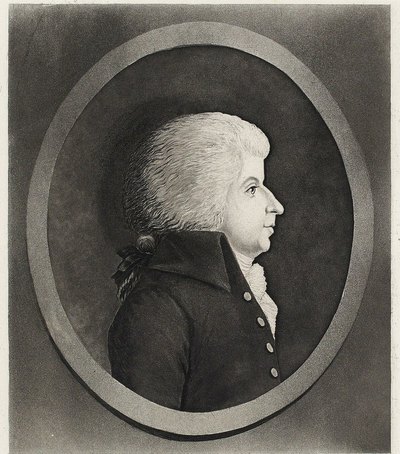
Prenatal music, brain-boosting baby CDs: the name on the cover is very often Mozart. The craze began with one short experiment involving thirty-six university students.
Where you heard it
In a study published in the journal Nature in 1993, students who listened to Mozart's Sonata for Two Pianos in D major for ten minutes did slightly better on spatial reasoning tasks. The effect faded within ten to fifteen minutes. Yet the result spread as "listening to Mozart makes you smarter", and in 1998 the governor of the US state of Georgia proposed funding to give every newborn a classical music CD. Later studies failed to find the effect clearly again.
The real story
Mozart wrote the sonata in Vienna in 1781, to play with his pupil Josepha Auernhammer. The two pianos pass the melody back and forth like a ball.
Tell a friend
The original "Mozart effect" study was students listening for ten minutes and getting a bump that faded within fifteen minutes, with no babies anywhere.
Wolfgang Amadeus Mozart1756–1791Read the story of Mozart →