
Details
- Composer
- Alexander Scriabin
- Catalogue no.
- Op. 11 No. 9
- Key
- E major
- Scoring
- Piano
- Length
- about 2 min
Recording
Morning music at 7
Track info
「Prelude in E major」Performed by Ventus55recorded 2013Wikimedia CommonsCC BY-SA 3.0
About this piece
A little over a minute: a piece that ends within a single breath, yet holds a whole scene.
At a glance
- What it isthe ninth of Alexander Scriabin's Twenty-Four Preludes for piano, Op. 11, in E major.
- Who, when, whyScriabin wrote them over several years from 1888 and published the set in 1897. Like Chopin's preludes, they pass through all twenty-four keys.
- What to listen forthe gently rocking accompaniment and the quiet melody singing above it.
Listen for
- The openingthe left hand lays down softly rocking chords, and the right hand brings out a calm melody.
- The middlethe melody rises a little, and the harmony subtly shifts color.
- The endingthe sound fades and closes quietly. Because it is so short, listen to the last chord's lingering echo.
When it was written
Scriabin, born in Moscow, was a pianist and composer who studied at the Moscow Conservatory, graduating the same year as his classmate Rachmaninoff. As a young man he revered Chopin, and he arranged this set of preludes in the same key order as Chopin's.
The set was published with the support of the publisher Belyayev. Later Scriabin pushed his harmony and forms further and further toward the strange and mystical, eventually conceiving works that would unfold sound and color together. This prelude belongs to the lyrical young Scriabin, before that change began.
A question to think about
Scriabin began by following his idol Chopin, yet ended in music like nobody else's. Learners start by imitating someone. But schools and exams today mostly measure the ability to reproduce set answers.
What should education change to help learners move from learning by imitation to having ideas of their own?
The composer
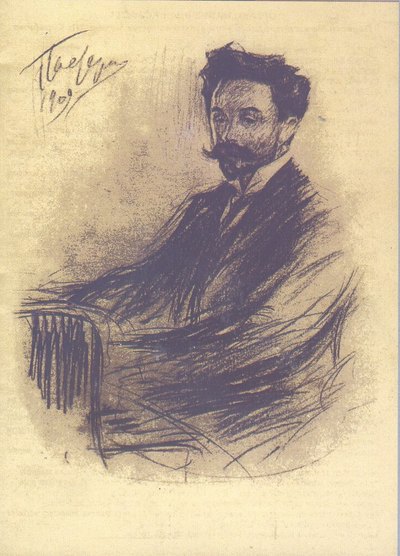 Alexander Scriabin1872–1915More on Scriabin →
For moods like
Grateful · Calm · Focused
moderate tempo · major key · energy 3
Find more pieces in Listen by Mood →