
VOL. 04 · Track 11 · 11 / 15
String Quartet No. 12 · I. Allegro
A movement in which the viola brings out a theme like a wide prairie above shimmering violins. It was written during a summer in a small Czech village in Iowa.
 VOL. 04
 A Romantic Night낭만의 밤
This track plays with a membership. Tracks 1 and 2 are open to everyone.About membership
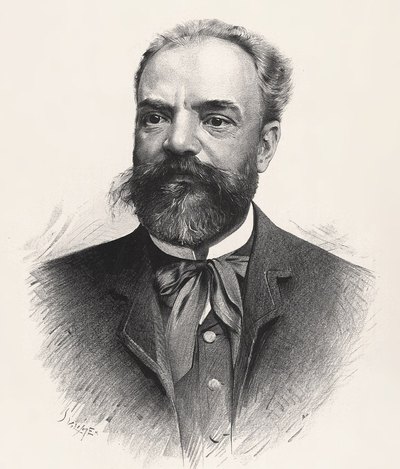 The composer of this pieceAntonín Dvořák1841–1904 · born in Nelahozeves, Czech Republic
About this piece
The two violins lay down a gently shimmering sound, and above it the viola brings out a theme that seems to gaze across open fields. The viola, usually hidden in the middle, is the first to sing here.
At a glance
- What it isthe first movement of String Quartet No. 12, in F major, marked Allegro ma non troppo, fast but not too fast.
- Who, when, whywritten in the summer of 1893, while Dvořák was staying in Spillville, a Czech village in Iowa.
- What to listen forthe first theme brought out by the viola, and the color of its simple five-note melody.
Listen for
- The viola's songover the shimmering violins, the viola presents the theme. Dvořák himself was a violist.
- Five notesthe melody favors a five-note scale, giving it a simple, open feeling.
- Cello and violinthe cello and violins then take up the theme and spread it wide before moving to a gentle second theme.
When it was written
In the summer of 1893, having finished his first year in New York, Dvořák went with his family to Spillville, a small village in Iowa. Czech immigrants lived there together, so Czech was spoken and there was a Czech church, where he even played the organ.
Dvořák noted in the score that he finished the sketch of this quartet in three days and completed the piece in a little over two weeks. Many listeners feel that the easy summer he spent in a village so like home lives on in the quartet's bright colors.
A question to think about
Far away in America, Dvořák found comfort in a village where people from his homeland lived together. Today, too, immigrants in a strange country often gather into communities.
Do communities where immigrants live together help them adapt to a new society, or do they create distance from it? What is needed to keep the culture of home while becoming part of a new society?