
VOL. 05 · Track 12 · 12 / 15
Euphonic Sounds
A rag whose name means pleasing sounds. Published in 1909, after Joplin had moved to New York, it lets the right hand ride off the beat above a walking left hand.
 VOL. 05
 Ragtime: Joplin and Scott래그타임 — 조플린과 스콧
This track plays with a membership. Tracks 1 and 2 are open to everyone.About membership
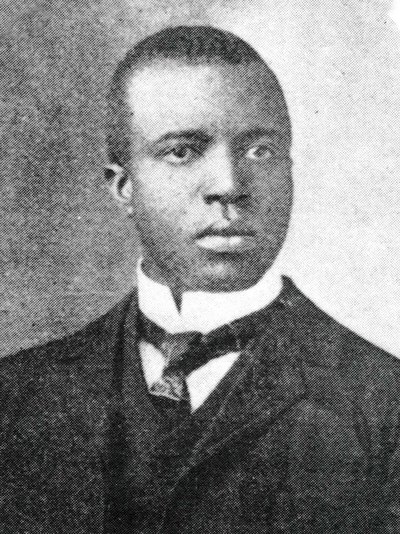
The composer of this pieceScott Joplinc. 1868–1917About this piece
Euphonic is an English word meaning pleasing to the ear. The title practically announces itself: pleasing sounds. Why did Joplin choose such a name? The reason is not known. But if you do as the title suggests and pay attention to the sound itself, this piece becomes all the more enjoyable.
At a glance
- What it isa ragtime piece for solo piano.
- Who, when, whypublished in 1909 by Scott Joplin, who had settled in New York.
- What to listen forthe meeting of a left hand that keeps an even beat and a right hand whose syncopation slips around it.
Listen for
- Two hands in conversation: in ragtime, the left hand usually alternates low notes and chords to keep an oom-pah beat, while the right hand deliberately plays across the beat. Follow how the two hands lock together and slip apart in this piece too.
- Several sectionsa classic rag usually strings together a few sections of about sixteen bars each, and each section is repeated once. Listen for how the mood changes each time the tune changes.
- The color of the harmony: as the title suggests, listen to the sound itself. Not just the melody, but the shifts of color as the chords underneath change are part of the pleasure of this piece.
When it was written
Ragtime is piano music that arose among African American musicians in the late nineteenth century. In the early twentieth century it sold widely as sheet music and became America's popular music. Joplin made his name in Sedalia, Missouri, by publishing the Maple Leaf Rag in 1899, then moved by way of St. Louis to New York around 1907.
Joplin regarded ragtime not just as cheerful dance music but as music worth listening to seriously. He often wrote on his sheet music a reminder not to play rags fast, and in 1908 he published a book of exercises for learning to play ragtime. Around this time he was pouring much of his energy into his opera Treemonisha.
Joplin died in New York in 1917. His music was forgotten for a while, then loved widely again thanks to the 1970s film The Sting, and in 1976 he was awarded a special Pulitzer Prize.
A question to think about
Joplin named this rag pleasing sounds. It can sound like a wish that ragtime, which began as music for dancing, be treated as music for careful listening.
The same music feels different when you enjoy it with your body and when you sit still and listen. Among the sounds you have been letting slip by lately, which one would you like to stop and really listen to?