
VOL. 05 · Track 1 · 1 / 15
Original Rags
Known as the first rag Scott Joplin published, in 1899, before the Maple Leaf Rag made his name: right-hand syncopation slipping over an oom-pah left hand.
 VOL. 05
 Ragtime: Joplin and Scott래그타임 — 조플린과 스콧
Track info
「Original Rags」Performed by Gnissahrecorded 2024Wikimedia CommonsPublic Domain
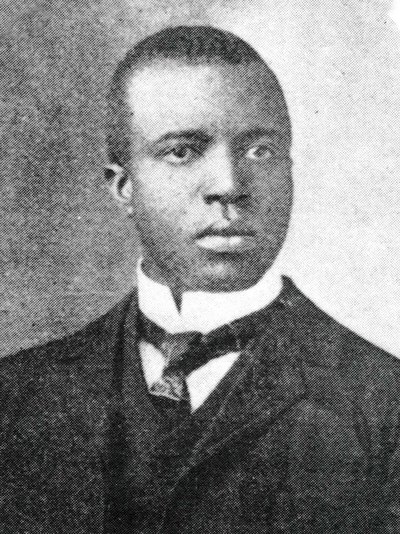
The composer of this pieceScott Joplinc. 1868–1917About this piece
In 1899 a pianist working in Sedalia, Missouri, put one of his rags into print for the first time. The pianist was Scott Joplin, and the piece was Original Rags. Later that same year came the Maple Leaf Rag, the piece that would go on to make his name, but this one is known as the first rag he published, ahead of it. What did Joplin sound like before he was famous?
At a glance
- What it isa ragtime piece for piano in G major.
- Who and whenwritten by Scott Joplin and published in 1899. It is known as the first rag he published.
- What to listen forthe even step of the left hand, the right hand slipping off the beat, and the moments when a new section begins.
Listen for
- The left hand's stepin a rag the left hand usually alternates a low note and a chord, walking oom-pah in two. It is a step inherited from the march. Because that step holds steady, the right hand is free to play.
- Right-hand syncopationsyncopation means striking just ahead of, or just off, the place where the strong beat should fall. That feeling of a familiar beat slipping now and then is the lilt of ragtime.
- Where the sections change: rags are usually built from several short sections joined together. Listen for the spots where the height of the tune or the mood suddenly shifts, and see if you can say, here a new section starts.
When it was written
Ragtime is piano music that grew up among African American musicians in the late nineteenth century. With no radio, people bought sheet music and tried new pieces on the piano at home. A rag appearing in print meant it could travel into many living rooms.
Joplin was born around 1868 in Texas, worked as a travelling pianist across the Midwest, and settled in Sedalia in the 1890s. After publishing this piece in 1899, he brought out the Maple Leaf Rag that same year, the rag that would make his name, and in 1902 he published The Entertainer.
The composer, Scott Joplin
Joplin thought of ragtime as music to be played with care. In 1908 he published School of Ragtime, a set of exercises on how to play it, and he urged players not to rush. In 1911 he published his opera Treemonisha at his own expense, but never saw a proper staging of it in his lifetime. He died in New York in 1917. His music found a wide audience again through the 1973 film The Sting, and in 1976 he was given a special Pulitzer Prize.
A question to think about
Original Rags is the first rag Joplin put into print, before the Maple Leaf Rag made him known. The Joplin we know today stands on top of first steps like this one, which far fewer people remember.
We tend to remember the big successes and rarely look back at the first attempts that came before them. When you look at someone's first work, what would you want to find in it, and how would you like your own first steps to be remembered?