
VOL. 07 · Track 2 · 2 / 15
Piano Sonata No. 11 · I. Andante
A movement in which one gently rocking theme changes its clothes six times. Whether minor, slow or fast, the same theme can be heard.
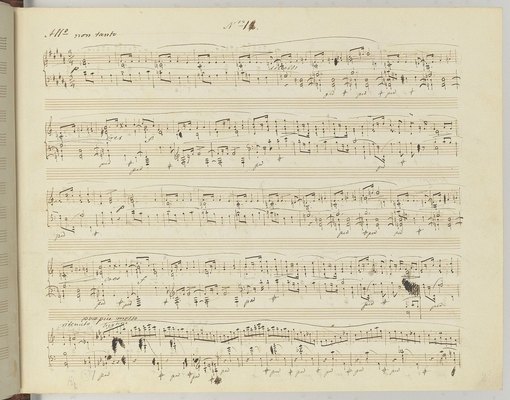 VOL. 07
 Just One Piano피아노 한 대로
Track info
「Piano Sonata No. 11」Performed by Bernd KruegerWikimedia CommonsCC BY-SA 3.0 de
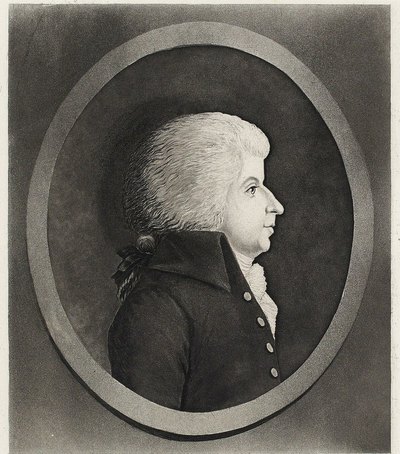 The composer of this pieceWolfgang Amadeus Mozart1756–1791 · born in Salzburg, Austria
About this piece
The first movement of a sonata is usually fast and dramatic. Mozart's Piano Sonata No. 11, however, begins with a gently rocking song and then presents that song in six different guises.
At a glance
- What it isthe first movement of Piano Sonata No. 11, a theme with six variations. The last movement is the famous 'Turkish March'.
- Who, when, whywritten around 1783, when Mozart was about twenty-seven, and published in Vienna in 1784.
- What to listen forwhat changes and what stays the same in each variation.
Listen for
- The themeAndante grazioso, walking gracefully. A rhythm pairing long and short notes rocks gently.
- Changing clothesas the variations go on, the notes are divided more finely, the music darkens into the minor, and the hands cross between high and low.
- Slow and fastthe fifth variation slows to an Adagio, and the sixth speeds up to an Allegro and closes the movement.
When it was written
In 1781 Mozart left Salzburg and settled in Vienna, setting out on his own as a pianist, teacher and composer. In 1784 the Viennese publisher Artaria issued three of his piano sonatas as a set, and this is one of them.
The sonata has an unusual plan: variations in the first movement, a minuet in the second, and a rondo 'in the Turkish style' at the end. It has no fast sonata-form movement at all. Viennese audiences of the time enjoyed 'Turkish' music that imitated the sound of Ottoman military bands.
A question to think about
Even when the same theme changes six times, we still recognize it. If the frame stays the same, we feel it is the same thing, however much the surface changes.
If a person's thoughts and appearance change greatly as they grow, are they still the same person? What unchanging frame makes us who we are?