
VOL. 06 · Track 2 · 2 / 15
Combination March
An early Joplin march published in 1896. Inside its brisk two-beat step lies the frame from which ragtime would grow.
 VOL. 06
 The Other Joplin조플린의 또 다른 얼굴
Track info
「Combination March」Performed by Gnissahrecorded 2024Wikimedia CommonsPublic Domain
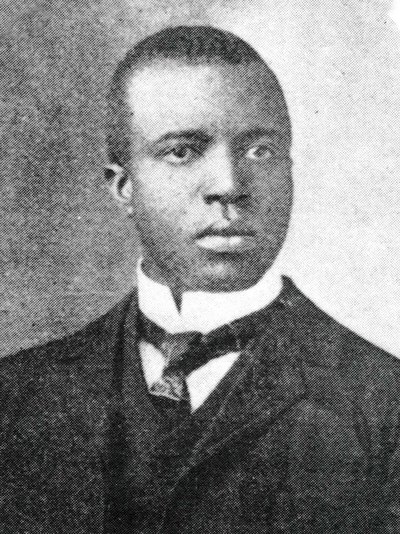 The composer of this pieceScott Joplinc. 1868–1917
About this piece
One-two, one-two. From a single piano comes a sound like a band marching out. This is a march published by Scott Joplin, later called the King of Ragtime, before he had made his name. What thread connects this brisk step to ragtime?
At a glance
- What it isa march for piano.
- Who and whenwritten by Scott Joplin and published in 1896, one of the first pieces he published.
- What to listen forthe even two-beat step in the left hand, and the moments when one short melody gives way to the next.
Listen for
- The two-beat stepin a piano march the left hand usually alternates a low note and a chord, walking 'oom-pah, oom-pah'. Follow it while imagining the bass drum and snare of a band.
- Several sectionsmarches of this period are usually built from several sections of around sixteen bars that follow one another and repeat. Listen for how the melody and mood change when a new section begins.
- A comparison with the rags: hear one of Joplin's later rags right after. The left-hand step and the chain of sections are alike, but in a rag the right hand leaps in between the beats.
When it was written
The 1890s in America were an age of marches. Marches played by John Philip Sousa's band were hugely popular, and people danced a dance called the two-step to them. With no radio, popular marches also sold widely as piano sheet music, and families played them at the piano at home.
Ragtime grew out of this march frame. The structure of several sections that follow and repeat, and the two-beat step in the left hand, came from the march; to these were added the syncopated rhythms of African American musicians.
Joplin grew up in Texas, travelled through many towns playing piano, and in the 1890s settled in Sedalia, Missouri. This march came out three years before his first published rag appeared in 1899.
A question to think about
Ragtime did not fall from the sky. It arose when new rhythms were laid over the frame of the march, music people already loved to play. Joplin, too, published marches before his first rag.
Among the music or trends that feel new to us today, which ones can you think of that grew by borrowing the frame of something older?