
VOL. 03 · Track 8 · 8 / 15
Symphony No. 40 · Movement III
A minuet that is hard to dance to. Fierce G minor rhythms twist the beat, while in the middle trio the horns sing gently.
 VOL. 03
 A Classical Stroll고전파 산책
This track plays with a membership. Tracks 1 and 2 are open to everyone.About membership
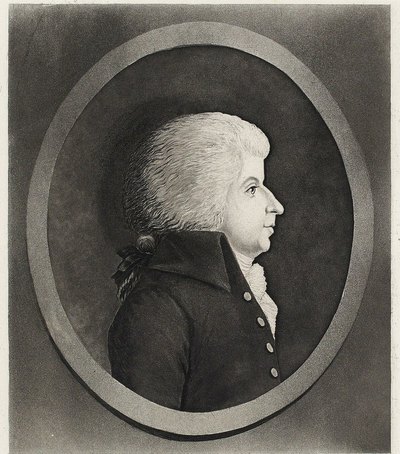 The composer of this pieceWolfgang Amadeus Mozart1756–1791 · born in Salzburg, Austria
About this piece
A minuet is originally an elegant dance in three. But the minuet of Symphony No. 40 surges in roughly, its beat seeming to cross itself, and it is not easy to dance to.
At a glance
- What it isthe third movement of Symphony No. 40 in G minor, a minuet with a middle trio, after which the minuet returns.
- Who, when, whyone of the last three symphonies, written within little more than six weeks in the summer of 1788, when Mozart was thirty-two.
- What to listen forthe minuet's rhythm, which seems to twist the beat, and the bright G major of the trio.
Listen for
- A fierce dancethe strings begin with a strong G minor melody. The accents cross the boundaries of the bars, so the three beats seem to sway.
- Crossingthe upper and lower lines cross as if chasing each other, raising the tension.
- The trioin the middle the music turns to G major, strings and woodwinds sing gently, and at the end the horns step forward with a warm sound.
When it was written
In 1788 Mozart was struggling for money in Vienna and wrote several letters asking a friend for loans. Amid this, that summer he completed Symphonies Nos. 39, 40 and 41 one after another. It is not known for certain for which concert he wrote them.
No. 40 is one of only two symphonies Mozart wrote in a minor key. He later made a version adding clarinets, which some take as a sign that he had an opportunity to have it performed.
A question to think about
Mozart wrote his last three symphonies in a burst during a year when he was tormented by debt. Hard circumstances did not stop his creative work.
Should society help artists so they can devote themselves to their work without worrying about making a living? If so, what kind of help would be fair?