
VOL. 03 · Track 15 · 15 / 15
Symphony No. 8 · Movement IV
A finale in which a stray note suddenly shatters a whispering theme. It is full of Beethoven's mischief and surprise.
 VOL. 03
 A Classical Stroll고전파 산책
This track plays with a membership. Tracks 1 and 2 are open to everyone.About membership
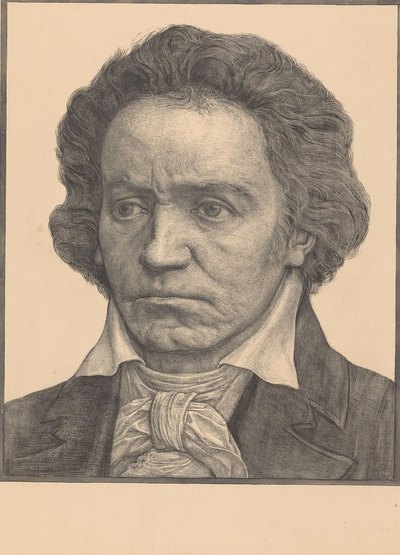 The composer of this pieceLudwig van Beethoven1770–1827 · born in Bonn, Germany
About this piece
Music that has been whispering and racing along quietly suddenly stops short as the whole orchestra blares out a single odd note. It is a joke Beethoven plays on his listeners in the finale of the Eighth Symphony.
At a glance
- What it isthe fourth and last movement of Symphony No. 8, marked Allegro vivace, fast and lively.
- Who, when, whywritten in 1812, when Beethoven was about forty-two, at almost the same time as the Seventh. He is said to have called it 'my little symphony in F'.
- What to listen forthe strange note that bursts out loudly at the end of a soft theme, and a long ending that seems to finish but keeps going.
Listen for
- Whisperingthe violins bring out the theme very softly and quickly.
- The joltas the theme draws to a close, the orchestra sounds one note foreign to the key, very loudly. That note returns later as the key that changes the music's path.
- The long endingchords that sound final are repeated again and again, and the close stretches out. An ending nearly as long as what came before sounds like Beethoven's humor.
When it was written
In 1812, as soon as he had finished the Seventh Symphony, Beethoven threw himself into the Eighth. That summer he even met Goethe at the Bohemian spa town of Teplitz. The Eighth was completed in Linz that autumn. Unlike the large Seventh, the Eighth is short and light, but it hides surprises everywhere.
The Eighth was first performed at a concert in Vienna in February 1814. It is said it did not win as much applause as the Seventh, played the same day. Today it sounds like a piece that shows how freshly Beethoven could play within the light frame of the older symphony.
A question to think about
Beethoven is known as a serious composer, yet here he startles his listeners and makes them laugh. Seriousness and mischief lived together in one person.
For someone doing serious work, are humor and play a distraction or a strength? Have you had an experience where laughter made a serious conversation deeper?