
VOL. 03 · Track 13 · 13 / 15
Symphony No. 6 · II. Andante
A melody drifts at leisure over an accompaniment like a babbling brook. At the end, flute, oboe and clarinet sing as birds.
 VOL. 03
 A Classical Stroll고전파 산책
This track plays with a membership. Tracks 1 and 2 are open to everyone.About membership
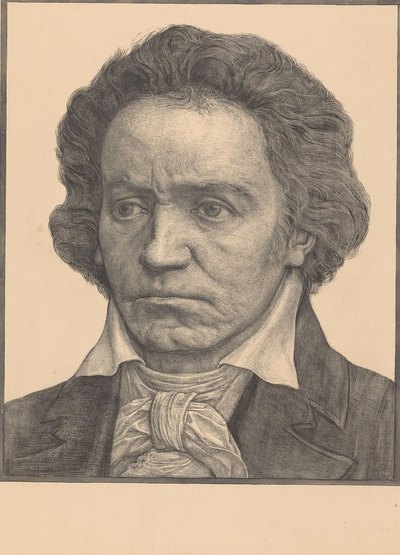 The composer of this pieceLudwig van Beethoven1770–1827 · born in Bonn, Germany
About this piece
Beethoven loved walking the woods and field paths around Vienna. He gave the second movement of his Sixth Symphony, the Pastoral, the title 'Scene by the Brook'.
At a glance
- What it isthe second movement of the five-movement Symphony No. 6. Beethoven gave each movement a title.
- Who, when, whycompleted in 1808, when Beethoven was about thirty-eight. It was first performed that December, together with the Fifth Symphony.
- What to listen forthe strings' accompaniment rocking like ripples, and the birdsong at the end.
Listen for
- Ripplesmuted strings keep up a gently swaying figure that sounds like a flowing brook.
- Melodyabove it, violins and woodwinds trade an easygoing tune.
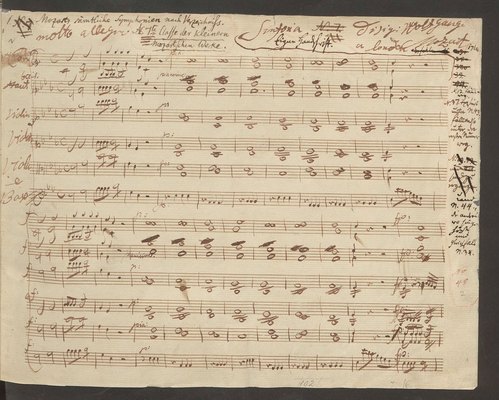
- Birdsongnear the end the music pauses for breath, and the flute becomes a nightingale, the oboe a quail and the clarinet a cuckoo. Beethoven wrote the birds' names into the score himself.
When it was written
Beethoven attached a phrase to this symphony: more the expression of feeling than painting. He did not mean to depict brooks or birds literally, but to put into music what one feels in the countryside. In summer he would stay in villages near Vienna such as Heiligenstadt and enjoy long walks.
On 22 December 1808 Beethoven gave a concert of his own works lasting more than four hours at the Theater an der Wien in Vienna. The Fifth and Sixth Symphonies and the Fourth Piano Concerto, among others, were heard for the first time that day. It is said the hall was cold and the music under-rehearsed.
A question to think about
Even as his hearing faded, Beethoven found comfort walking in nature and put that feeling into music. Many people living in cities today have no woods or brook within easy reach.
Should a place to rest and walk in nature be a right given to everyone? If such places are given unequally depending on where people live, what should change?