
VOL. 08 · Track 5 · 5 / 15
Mazurka No. 15
A mazurka in which you seem to hear village musicians' instruments. In the middle, unfamiliar notes like an old mode add the color of country song.
 VOL. 08
 Fifteen Before Sleep잠들기 전 열다섯 곡
This track plays with a membership. Tracks 1 and 2 are open to everyone.About membership
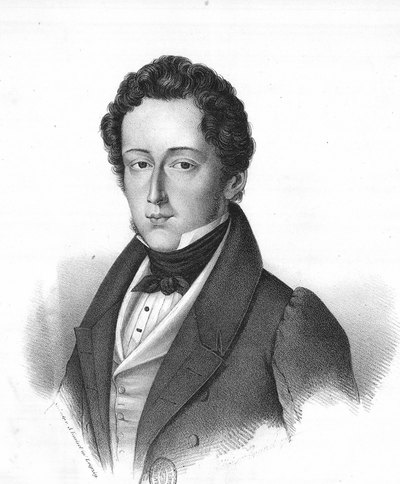 The composer of this pieceFrédéric Chopin1810–1849 · born in Żelazowa Wola, Poland
About this piece
A low note drones on like a bagpipe while the melody whirls above it. In Mazurka Op. 24 No. 2 you seem to hear the musicians of a Polish village playing.
At a glance
- What it isthe second of four Mazurkas, Op. 24, in C major.
- Who, when, whywritten by Chopin in Paris around 1834 to 1835, when he was twenty-four or twenty-five, and published in 1836.
- What to listen forthe accompaniment holding a long low note, and the unfamiliar notes of the middle section.
Listen for
- Bagpipethe left hand holds the same low note for a long time, often heard as an imitation of a country instrument's drone.
- Strange notesin the middle section, notes slightly different from the usual major or minor scale, like an old mode, enter the music. It is a color typical of village song.
- The returnthe opening dance comes back, and the sound gradually dies away into the distance.
When it was written
The mazurka is a dance in three from the country dances of Mazovia in central Poland, often with the accent on the second or third beat. Chopin remembered the folk songs and village musicians he heard in the countryside as a boy and carried their sound onto the piano.
By 1836, when Op. 24 was published, Chopin was making his name in Paris as a pianist and teacher. He seldom gave public concerts, but his mazurkas were played in many cities as soon as they appeared, spreading the sound of Poland across Europe.
A question to think about
Chopin turned the simple music of village players into refined piano pieces and brought the sound of the Polish countryside into Parisian salons. A modest local culture was reborn as art somewhere else.
When someone takes folk music or a traditional culture and turns it into their own work, what respect is owed to the people who have kept that culture alive?