
VOL. 02 · Track 6 · 6 / 15
Concerto No. 9 · Movement II
A slow movement in which the soloist sings quietly over a simple accompaniment. Bach studied this concerto by arranging it for keyboard.
 VOL. 02
 A Baroque Morning바로크의 아침
This track plays with a membership. Tracks 1 and 2 are open to everyone.About membership
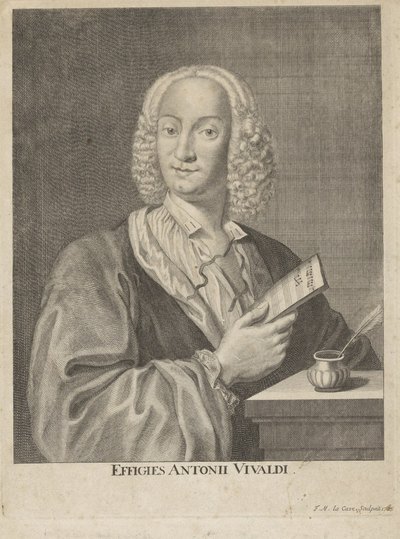 The composer of this pieceAntonio Vivaldi1678–1741 · born in Venice, Italy
About this piece
In 1711 a collection of Vivaldi concertos published in Amsterdam spread to musicians all over Europe. In Weimar, Germany, the young Bach studied several of them by writing them out for keyboard. Concerto No. 9 is one of them.
At a glance
- What it isthe second movement, a slow Larghetto, of Concerto No. 9 in D major from the twelve concertos of L'estro armonico.
- Who, when, whyit belongs to Vivaldi's first collection of concertos, published in Amsterdam in 1711 when he was about thirty-three. It was written for solo violin and strings.
- What to listen forthe song the soloist sings over a simple supporting accompaniment.
Listen for
- The accompanimentthe strings support quietly with very simple chords.
- The songabove it the soloist sings a slow, gentle melody. It was written for solo violin, but the Pyeongeum recording is an arrangement for trumpet and organ.
- The endthe short song closes quietly and passes into the fast last movement.
When it was written
L'estro armonico was the first collection of concertos Vivaldi published. It appeared not in Venice but from a publisher in Amsterdam, then ahead in printing technology, and spread throughout Europe. Its three movements, fast, slow, fast, and the give-and-take between soloist and ensemble became a model for many later composers.
Around 1713 to 1714, while working in Weimar, Bach wrote out this Concerto No. 9 as a solo harpsichord piece. By copying another composer's music he learned its construction firsthand. In this way Vivaldi's concertos flowed into Bach's music.
A question to think about
Bach learned the construction of Vivaldi's concertos by copying them out by hand. Following another's work closely, note by note, was an important way of learning, and it later helped him find a voice entirely his own.
Where is the line between learning by imitating someone's work and copying it? What more is needed for imitation to become learning?