
VOL. 02 · Track 4 · 4 / 15
Concerto No. 3 · I. Allegro
A movement in which farmers celebrate the end of the harvest with dance and song. The violin even depicts a drunkard staggering and falling asleep.
 VOL. 02
 A Baroque Morning바로크의 아침
This track plays with a membership. Tracks 1 and 2 are open to everyone.About membership
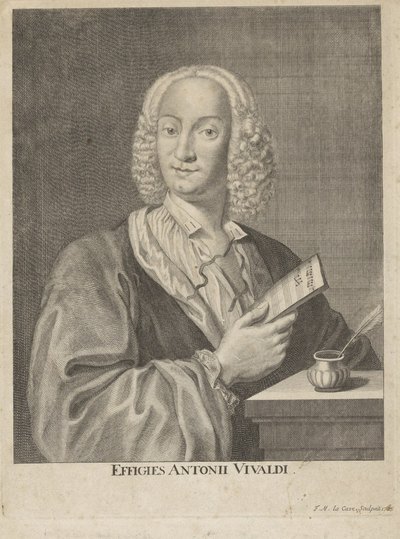 The composer of this pieceAntonio Vivaldi1678–1741 · born in Venice, Italy
About this piece
With the harvest gathered in, the village throws a feast. People dance, sing and drink wine, and one of them drinks so much that he staggers and finally falls asleep. The first movement of 'Autumn' in The Four Seasons depicts this scene.
At a glance
- What it isthe first movement of 'Autumn' from The Four Seasons, a fast Allegro.
- Who, when, whythe first movement of the 'Autumn' concerto in Vivaldi's collection published in 1725.
- What to listen forthe full orchestra's merry dance, and the solo violin's picture of a drunkard staggering.
Listen for
- The feastthe orchestra begins with a merry rhythm that seems to stamp, the villagers' dance.
- Staggeringthe solo violin runs up and down quickly, then sways as if losing the beat. The score marks it 'the drunkard'.
- Sleepnear the end the music slows and quiets, depicting the drunkard falling asleep, then closes with the feast's rhythm from the start.
When it was written
The Four Seasons are the first four concertos of Il cimento dell'armonia e dell'inventione, a collection Vivaldi published in Amsterdam in 1725. Each comes with a sonnet describing its season, and the score marks which line of the poem each passage depicts. The sonnets are sometimes thought to be by Vivaldi himself, but this is not certain.
The 'Autumn' concerto moves from the feast of the first movement to deep sleep in the second and a dawn hunt in the finale, a plan that seems to follow one day of the season. Vivaldi used the solo violin's virtuosity to depict even human gestures in sound.
A question to think about
'Autumn' begins with a feast celebrating together the grain that took a year of sweat to bring in. It is the joy of sharing the fruits of labor.
How visible today is the effort of those who grow and harvest the food we eat? What is needed for the labor of people who produce our food to be properly valued?